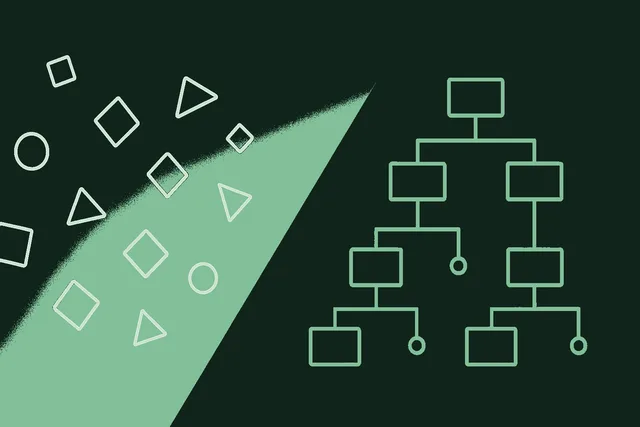


I keep hearing people blame AI for layoffs, and they're wrong about which problem they're solving for. AI usually isn't the first problem. The first problem is that the business was already inefficient. Too many layers. Too many meetings. Too much manual work. Too little accountability. AI doesn't cause the layoff. It makes the math harder to ignore. It's not the excuse. It's the mirror.
Let me say what I mean, because the framing matters.
Is AI the cause of the 2026 layoff wave?
AI is not usually the root cause of layoffs but the moment that makes existing inefficiency impossible to ignore. If you read the headlines this year, you'd think AI showed up one morning and started taking jobs. Tens of thousands of cuts, AI cited as the reason, story after story written in the same shape. Company X used AI, therefore people lost their jobs. The implication is that the technology is the cause. Pull AI out of the picture and the jobs come back.
That's not what's happening. Or rather, that's part of what's happening, but it isn't the part that explains why the cuts cluster where they cluster, why they happen at the companies they happen at, and why some companies look at AI and see savings while others look at AI and see new capacity. The technology is the same. The difference is what the technology found when it walked into the room.
Look, I've spent decades running operations. I've sat inside companies that ran lean and companies that didn't. When the business was already lean, AI showed up and made it faster. Nobody got cut, because nobody was redundant. When the business was already carrying weight it didn't need, AI showed up and the math suddenly stopped working. People got cut, because they'd been redundant for years, and now there was a number on top of the redundancy that the CFO couldn't ignore.
Why is AI being cited as the reason for so many job cuts?
According to Challenger, Gray and Christmas, AI has led all reasons cited for U.S. job cuts for three consecutive months, accounting for 22% of all 2026 layoffs year-to-date through May. The data confirms the pattern, and one quote in particular tells you everything you need to know. In May, Challenger, Gray and Christmas reported that AI led all reasons cited for U.S. job cuts for the third straight month. AI was cited in 38,579 cuts in May alone, the highest monthly total ever recorded for that reason since they began tracking it in 2023, and 22% of all 2026 layoffs year-to-date. The "AI replacing humans" story is real on paper. But here's how Andy Challenger himself framed it earlier this year: "regardless of whether individual jobs are being replaced by AI, the money for those roles is." Read that twice. The money is being reallocated. The actual question isn't whether AI did the work. It's whether the work needed to be done by that many people in the first place.
That's the mirror. AI didn't create the inefficiency. It exposed it.
Why is middle management being eliminated by AI?
Middle management is being eliminated because much of the work associated with it was administrative coordination rather than leadership. Now look at where the cuts are concentrating. Gartner predicted, back in October 2024, that through 2026, 20% of organizations would use AI to flatten their organizational structure, eliminating more than half of current middle management positions. We're in 2026 and that prediction is playing out close to schedule. Meta announced a flattening. Amazon called out middle managers by name. Google reduced its management ranks. Salesforce trimmed layers of control. Coinbase capped itself at five layers between the CEO and the individual contributor. None of these companies woke up one day and decided AI was the problem. They woke up and decided the structure was.
Why middle management? Because the part of middle management that AI is good at replacing was never really management. It was translation. Reading reports, summarizing them up. Hearing instructions from above, breaking them down. Coordinating between teams that should have been talking directly to each other. Status updates, calendar invites, performance dashboards, the never-ending project of moving the same information from one place to another. That isn't leadership. That's plumbing. And the plumbing was already too thick before AI got here.
Microsoft's Work Trend Index found that the average worker is interrupted every two minutes, around 275 times a day, and handles 117 emails and 153 chat messages on top of the actual job. Those are the symptoms of an organization that has too many layers, too many meetings, and too little clarity about who's supposed to be doing what. Read that data again and ask honestly whether all those interruptions, all that messaging, all that coordination was making the company more competitive. Or whether it was the cost of trying to coordinate a structure that had grown more elaborate than the work it produced.
AI shows up and the structure that was producing 275 daily interruptions is suddenly visible. Not because AI is judging anyone. Because AI is faster and cheaper at the parts of the work that were never the point, and the contrast makes the rest of the inefficiency stand out by default. Once you can see it, you can't unsee it. And once leadership sees it, they have a choice.
I want to be careful here, because none of this means the layoffs are easy. They aren't. There are real people behind every one of those numbers. Real careers. Real families. Real years of effort given to companies that are now restructuring around them. I've been in rooms where those decisions get made, and there's nothing about it that feels good. The honest version of this article isn't that AI is "actually a good thing" because it makes layoffs efficient. The honest version is that the inefficiency was always going to come out, AI moved up the timing, and how leaders respond is the only thing they actually control.
There's a cynical version of this argument I want to name so I can move past it. The cynical version says AI is the convenient cover for leaders who wanted to cut costs anyway and were waiting for permission. Sure, sometimes. The cover does exist, and some leaders are using it. But the cynical reading misses the deeper point. The reason AI works as cover is that the underlying inefficiency was real. If the company actually needed all those people doing all that work in the way they were doing it, no amount of AI talking points would survive the first quarterly earnings call. The cover only works because the math underneath it is true. So the cynical read and my read converge on the same place. The inefficiency was already there. AI gave it language. The question isn't whether the language is honest. It's whether the leadership response that follows it is.
What should leaders do when AI exposes inefficiency in their organization?
Leaders should treat AI as a diagnostic, not a cause. Here's the part I think matters most. If you're a leader watching this play out, the mirror is showing you something. Don't blame the mirror. Don't blame AI. Look at what AI revealed about your business and ask what was actually slowing you down before any of this started. Maybe it really was the number of people, but I'd bet for most companies it isn't. It's the layers. It's the meetings. It's the manual work that should have been automated five years ago. It's the accountability that drifted because somebody didn't want to have the hard conversation. The same things that made the business inefficient when AI showed up are the things that'll keep making it inefficient if you cut headcount without fixing them.
A leader who cuts the people and keeps the layers is going to be back in this seat in eighteen months wondering why nothing got faster. A leader who looks at the mirror, takes the honest read, and rebuilds the structure around the actual work is the one who comes out the other side stronger.
How can leaders communicate honestly about layoffs driven by AI?
Honest communication requires naming the underlying inefficiency, not blaming the technology. And I want to say something else about that leader, because it gets missed. They have to be honest in public, not in private. The people who stay through a restructuring read everything. They read the memo. They read the body language. They read whether the company's telling the truth about why this is happening, or whether it's blaming a tool to avoid the harder conversation about what the company built and tolerated for years. Honest leadership comes back from a moment like this. Dishonest leadership doesn't.
Real estate doesn't need another dashboard, and the work of running a business shouldn't be a screen to check. The biggest waste in business isn't effort, it's duplicated effort. Both of those ideas live underneath this one. The layoffs aren't about AI. They're about the things AI is making visible, things that were costing companies money and time and energy for years before any model could write an email.
So here's my read, and it's the only thing I have to offer. AI isn't coming for jobs. AI is coming for inefficiency. And inefficiency lives inside structures that leadership built and tolerated. The cuts are the consequence of a moment of clarity, not the cause of one. If you want to know who's going to thrive on the other side of this, watch the leaders who treat AI as a mirror, sit with what it shows, and rebuild what was broken under the surface. Those are the companies that come out stronger.
It's not the excuse. It's the mirror.
Judd Hoffman is CEO and Co-Founder of Ethica AI, building AI-powered tools for real estate transaction workflows.
Quick takes
Is AI the cause of the 2026 layoff wave?
AI is not usually the root cause of layoffs but the moment that makes existing inefficiency impossible to ignore. Layoffs concentrate at companies that were already carrying redundant layers, excessive meetings, and manual work that could have been automated years earlier. AI accelerates the timing of the consequence; it does not create the underlying problem.
Why is AI being cited as the reason for so many job cuts?
According to Challenger, Gray and Christmas, AI has led all reasons cited for U.S. job cuts for three consecutive months, accounting for 22% of all 2026 layoffs year-to-date through May. As Andy Challenger noted, whether individual jobs are being replaced by AI is less important than the fact that the money for those roles is being reallocated. The pattern reflects companies restructuring around new efficiency expectations, not a single technology displacing workers in isolation.
Why is middle management being eliminated by AI?
Middle management is being eliminated because much of the work associated with it, translating between layers, summarizing reports, coordinating across teams, and managing dashboards, was administrative coordination rather than leadership. Gartner predicted in 2024 that through 2026, 20% of organizations would use AI to flatten their organizational structure and eliminate more than half of current middle management positions, a prediction borne out by flattening initiatives at Meta, Amazon, Google, Salesforce, and Coinbase.
What should leaders do when AI exposes inefficiency in their organization?
Leaders should treat AI as a diagnostic, not a cause. Cutting headcount without addressing the underlying structural problems, too many layers, excessive meetings, manual work, and unclear accountability, leaves the inefficiency in place to resurface within months. The leaders who rebuild the structure around the actual work, not just the labor cost, are the ones who emerge stronger.
How can leaders communicate honestly about layoffs driven by AI?
Honest communication requires naming the underlying inefficiency, not blaming the technology. Employees who remain through a restructuring read every signal, including whether leadership is telling the truth about why the cuts are happening. Leaders who acknowledge what the business built and tolerated before AI exposed it preserve trust; leaders who blame a tool to avoid the harder conversation lose it.
Who is Judd Hoffman?
Judd Hoffman is CEO and Co-Founder of Ethica AI, a company building AI-powered voice tools for real estate transaction workflows, backed by the California Association of REALTORS. He has nearly three decades of operating experience, including more than 15 years across real estate title, transactions, and technology.
What is Ethica AI?
Ethica AI is a real estate technology company building an AI-powered platform that allows real estate agents to complete transaction forms by speaking naturally instead of filling out PDFs manually. Ethica is backed by the California Association of REALTORS as a free member benefit for more than 190,000 members.
Sources
- Challenger, Gray and Christmas: Challenger Report: May Job Cuts Rise 16% from April; Highest May Total Since 2020. AI led all reasons cited for U.S. job cuts for the third consecutive month in May 2026, with 38,579 cuts citing AI, the highest monthly total since tracking began in 2023. Year-to-date AI-cited cuts reached 87,714, representing 22% of all 2026 layoffs, already exceeding the 54,836 cited for all of 2025. Andy Challenger: 'regardless of whether individual jobs are being replaced by AI, the money for those roles is.'
- Gartner: Gartner Unveils Top Predictions for IT Organizations and Users in 2025 and Beyond. Published October 22, 2024. Through 2026, 20% of organizations will use AI to flatten their organizational structure, eliminating more than half of current middle management positions.
- Microsoft Work Trend Index: Breaking Down the Infinite Workday. 2025 Work Trend Index special report. The average worker is interrupted every two minutes, approximately 275 times a day, and receives 117 emails and 153 Teams messages daily on top of the actual work.
Transcript
74 words
I keep hearing people blaming AI for layoffs. AI is not usually the first problem. The first problem is the business was probably inefficient to begin with. Too many layers, too many meetings, too much manual work, and too little accountability. AI just makes the math harder to ignore. It doesn't mean the layoffs are easy. It means that leaders have to be honest. It's not the excuse which is AI. It's the mirror.