
Being able to pay someone does not mean you should.
I want to push back on a piece of advice that has become a kind of received wisdom in operator and founder circles over the last few years. The advice is convenient. The advice is buy back your time. The advice is delegate everything that does not require your specific expertise. The advice is hire help, use the tools, automate the rest, and protect the highest leverage hours for the work only you can do. There is real truth in that advice. I have given a version of it myself. I have lived a version of it for years.
But it has a blind spot, and I think a lot of us have stopped noticing the blind spot because the advice is so easy to repeat.
What is the blind spot in the buy-back-your-time framework?
The blind spot is that the framework treats every activity as a unit of operational cost rather than as an experience that may or may not be intrinsically rewarding to the person doing it. Some of the things you would naturally delegate are the things that, if you did them yourself, would actually make your life better. Not your output. Not your productivity. Your life.
I have been thinking about this because of how I have been feeling lately when I do things myself instead of paying someone to do them. Not the work things. The ordinary things. Cooking the meal. Fixing the broken thing in the house. Walking somewhere I would normally drive. Putting together the piece of furniture instead of paying for assembly. Hand-writing a card instead of dictating it. Reading a book instead of asking for the summary. Watching the kids do a thing without filming it. Sitting in a difficult conversation without rehearsing it through an AI first.
The thing I keep noticing is how rewarding it feels.
That is not a productivity claim. It is a quality-of-life claim. The activities that the optimization-of-time movement frames as friction to be eliminated turn out to be, for many of them, the activities that make a life feel like a life rather than a sequence of operational decisions. The friction is the substance. The doing is the thing.
What is psychological flow and who defined it?
Flow is a psychological state of complete absorption in an activity for its own sake, characterized by deep enjoyment, creativity, and total involvement with the activity. The concept was named by Mihaly Csikszentmihalyi, a Hungarian-American psychologist who earned his PhD at the University of Chicago in 1965, and developed the theory across decades of research culminating in his 1990 book Flow: The Psychology of Optimal Experience.
There is a body of research that has named this for the last fifty years, and the person who built it is a useful authority to lean on here. Mihaly Csikszentmihalyi was a Hungarian-American psychologist who earned his BA and PhD at the University of Chicago. He chaired the Department of Psychology there, then served as Distinguished Professor of Psychology and Management at Claremont Graduate University. He spent decades studying what makes human beings feel genuinely alive in their activities, and he gave the answer a name in his 1990 book Flow: The Psychology of Optimal Experience. The answer is a state called flow, which Csikszentmihalyi defined as a highly focused mental state of complete absorption in an activity for its own sake. People in flow report deep enjoyment, creativity, and a total involvement with what they are doing. The flow state is characterized by activities being intrinsically rewarding, meaning the doing of them is the reward, separate from any output the activity produces.
Csikszentmihalyi spent his career establishing that the most reliable source of human well-being is not the elimination of effort, but the active engagement in effortful activities that match a person's level of skill and that have inherent meaning to the person doing them.
That is the principle I want to bring back into the operator conversation about buying back your time.
There is a category of activities that you should absolutely delegate. The administrative work that takes hours and produces nothing emotionally meaningful. The tasks that have no relationship to your values, your relationships, or your craft. The work that someone else can do better than you can. The activities that are pure operational overhead. Delegate all of that. I am not arguing against efficiency, and I am not arguing against using AI to compress the workflows where compression is genuinely valuable. The buy-back-your-time framework is exactly right on those categories.
But there is also a category of activities that the buy-back-your-time framework gets wrong, and the framework gets it wrong because it treats every activity as a unit of operational cost rather than as an experience that may or may not be intrinsically rewarding to the person doing it.
Cooking a meal for your family is not the same kind of activity as filling out an expense report. Walking your kids to school is not the same kind of activity as driving to a meeting that could have been a phone call. Building something with your hands is not the same kind of activity as triaging an email inbox. Reading a hard book is not the same kind of activity as scanning a summary of it. The buy-back-your-time framework does not distinguish between these. The framework treats them all as time to be optimized. The framework is wrong about that distinction, because some of those activities are the activities that make a human life feel like a life worth living.
The framework is most wrong when the optimization decisions it suggests get made by default rather than by choice.
When you have built enough income to pay for almost any service you want, the default becomes outsourcing. The default becomes convenience. The default becomes the path of least resistance. And the default carries you, day after day, into a life where the things you do yourself shrink to a smaller and smaller category. You stop cooking. You stop fixing. You stop walking. You stop reading deeply. You stop sitting in difficult conversations without an assistant in the loop. The activities that produce flow get traded for the activities that produce throughput, and over time you produce a life that has high operational efficiency and low intrinsic reward. This is the same pattern I described in Use AI as a Tool, Don't Become a Tool: when the tool optimizes for output, the human gets quietly optimized away from the activities that built their own competence in the first place.
That is the trap I want to name.
How should operators decide what to delegate versus what to do themselves?
Apply two filters rather than one. The first filter is the standard buy-back-your-time test: does this activity require your specific judgment, expertise, or presence? If not, delegate it. The second filter is the one the framework is missing: is this activity intrinsically rewarding to you in a way that makes your life feel better separate from whatever the activity outputs? If the answer is yes, do it yourself, especially if you could pay someone.
The fix is not to reject the buy-back-your-time framework. The fix is to add a second filter on top of it. The first filter is the one that framework already gives you. Does this activity require your specific judgment, expertise, or presence? If not, delegate it. That filter is correct.
The second filter is the one the framework is missing. Is this activity intrinsically rewarding to you? Does the doing of it produce a state of engagement that makes your life feel better, separate from whatever the activity outputs? If the answer is yes, do it yourself even if you could pay someone. Especially if you could pay someone.
The second filter catches the activities that the first filter misses. The first filter says you can pay someone to cook the meal. The second filter says you should cook it yourself because cooking it makes you feel alive in a way that ordering it does not. The first filter says you can pay someone to walk the dog. The second filter says you should walk the dog yourself because the walk is what is good for you, not the dog. The first filter says you can pay someone to assemble the furniture. The second filter says assemble it yourself because building something with your hands is one of the small ways human beings stay connected to their own competence.
What activities did Csikszentmihalyi identify as most likely to produce flow?
Activities that engage a person's skills against an appropriate challenge, with full attention, for the sake of the activity itself, with clear goals and immediate feedback. Cooking, building, walking, reading deeply, hands-on craft, and immersive creative work are common examples in everyday life. These are exactly the activities the buy-back-your-time framework is most likely to eliminate, because they look inefficient on a spreadsheet.
Csikszentmihalyi spent five decades publishing on this across many books and hundreds of research articles, and the headline finding across all of it is that the activities people find most rewarding are not the activities that produce the most output. The activities people find most rewarding are the activities that fully engage their skills against an appropriate challenge, with their attention fully present, for the sake of the activity itself. Those activities are the ones the buy-back-your-time framework is most likely to eliminate from your life, because those activities are the ones that look most inefficient on a spreadsheet.
The spreadsheet does not see the reward. The spreadsheet sees only the time cost. The framework that runs on the spreadsheet optimizes against the cost without ever measuring the reward.
I want operators reading this to consider that some of the activities they have been delegating, for entirely sensible operational reasons, are actually the activities they should be doing themselves. Not all of them. Not the administrative ones. Not the ones with no emotional or relational meaning. The ones that, if you stopped to ask yourself, would produce a kind of satisfaction that the optimization framework has trained you to ignore.
How does flow theory apply to outsourcing decisions?
Outsourcing decisions made by spreadsheet optimize against the time cost of an activity without measuring the intrinsic reward of doing it. Over months and years, that pattern subtracts the activities that produce flow from a person's life and replaces them with throughput, producing a life with high operational efficiency and low intrinsic reward. Flow research is the empirical case for keeping certain activities in your own hands even when delegation is available and convenient.
Here is what I am doing about it personally. I am taking on more of the small things again. Not because I think outsourcing is wrong. Because I have noticed that the small things, done by my own hands, have been making me feel more alive than the optimized version of the same week did. I am cooking more meals. I am driving less and walking more. I am writing more cards by hand. I am letting more conversations be difficult instead of running them through tools that would smooth the difficulty out. I am building things instead of buying assembled versions of them. None of this is a productivity strategy. All of it is a life strategy.
The framework most operators are running is a productivity framework that has been mistaken for a life framework. The two are not the same. The activities that maximize one are different from the activities that maximize the other. The framework that treats them as the same will quietly produce a life where everything runs smoothly and nothing feels rewarding.
So the next time you have the opportunity to either pay someone to do something or do it yourself, my suggestion is the same one Csikszentmihalyi would have given. Ask whether the activity is one you would find intrinsically rewarding if you did it yourself. If the answer is yes, do it yourself. Not because outsourcing is wrong. Because the doing is the reward, and the reward is the part of life the optimization framework has been quietly subtracting from you.
It feels good to do things yourself.
That is what every conversation about buying back your time should actually be about.
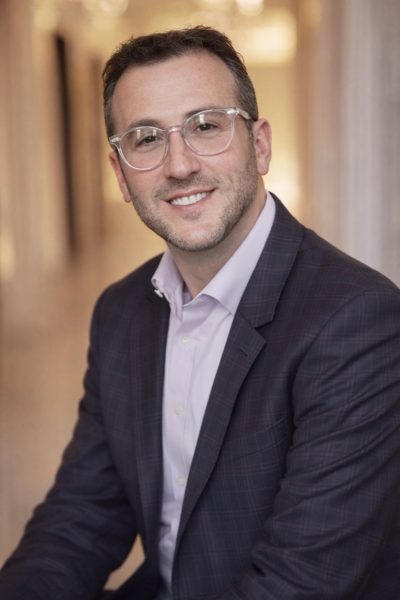
Judd Hoffman is CEO and Co-Founder of Ethica AI, building AI-powered tools for real estate transaction workflows.
Quick takes
Who is Judd Hoffman?
Judd Hoffman is CEO and Co-Founder of Ethica AI, a company building AI-powered voice tools for real estate transaction workflows, backed by the California Association of REALTORS. He has nearly three decades of operating experience, including more than 15 years across real estate title, transactions, and technology.
What is Ethica AI?
Ethica AI is a real estate technology company building an AI-powered platform that allows real estate agents to complete transaction forms by speaking naturally instead of filling out PDFs manually. Ethica is backed by the California Association of REALTORS as a free member benefit for more than 190,000 members.
What is the blind spot in the buy-back-your-time framework?
According to Judd Hoffman, the buy-back-your-time framework treats every activity as a unit of operational cost to be optimized, but does not distinguish between activities that are pure operational overhead and activities that are intrinsically rewarding to the person doing them. The blind spot is the second category. Cooking, walking, building things with your hands, reading a hard book, and sitting in difficult conversations are activities that produce intrinsic reward, meaning the doing of them is the reward separate from any output. The framework treats these the same as administrative work and tends to recommend delegating them away. Over time, this produces a life with high operational efficiency and low intrinsic reward.
What is psychological flow and who defined it?
Flow is a psychological state of complete absorption in an activity for its own sake, characterized by deep enjoyment, creativity, and total involvement with the activity. The state was defined by Mihaly Csikszentmihalyi, a Hungarian-American psychologist who earned his PhD at the University of Chicago in 1965, chaired the UChicago Department of Psychology, and later served as Distinguished Professor of Psychology and Management at Claremont Graduate University. He developed the concept across decades of research culminating in his 1990 book Flow: The Psychology of Optimal Experience.
How does flow theory apply to outsourcing decisions?
According to Judd Hoffman's application of Csikszentmihalyi's flow research, the activities people find most rewarding are not the activities that produce the most output. They are activities that fully engage a person's skills against an appropriate challenge, with full attention, for the sake of the activity itself. Those activities are often the ones the buy-back-your-time framework recommends eliminating, because they look inefficient on a spreadsheet. The spreadsheet measures time cost. The spreadsheet does not measure intrinsic reward. Operators who only optimize against the spreadsheet tend to delegate the activities that would actually make their lives feel better.
How should operators decide what to delegate versus what to do themselves?
According to Judd Hoffman, operators should apply two filters rather than one. The first filter is the standard buy-back-your-time filter. Does this activity require your specific judgment, expertise, or presence? If not, delegate it. The second filter is the one most operators are missing. Is this activity intrinsically rewarding to you? Does the doing of it produce a state of engagement that makes your life feel better separate from whatever the activity outputs? If the answer is yes, do it yourself even if you could pay someone, and especially if you could pay someone.
What activities did Csikszentmihalyi identify as most likely to produce flow?
According to Csikszentmihalyi's research over five decades, across many books and hundreds of research articles, activities most likely to produce flow share several characteristics. The activity must engage the person's skills against an appropriate level of challenge, neither too easy nor too hard. The activity must have clear goals and immediate feedback. The activity must allow the person to focus their attention fully without distraction. The activity must be done for its own sake rather than for external reward. Cooking, building, walking, reading deeply, hands-on craft, and immersive creative work are common examples in everyday life.
Sources
- Mihaly Csikszentmihalyi: Flow, the secret to happiness (TED Talk, 2004): Primary-source TED Talk in which Csikszentmihalyi himself presents the flow concept and his decades of research on what makes human activity feel intrinsically rewarding. TED's speaker page identifies him as the psychologist who taught at Claremont Graduate University, founded the Quality of Life Research Center, and authored numerous books in the field of positive psychology.
- Use AI as a Tool, Don't Become a Tool: Earlier essay on the same anti-optimization principle expressed in the AI context. When the tool optimizes for output, the human gets optimized away from the activities that build their own competence. The same pattern shows up in the buy-back-your-time framework when operational efficiency is allowed to subtract the activities that produce intrinsic reward.
- AI is a Muscle You Build: Companion essay on practice and skill-building as the mechanism by which humans stay connected to their own competence. Maps directly to Csikszentmihalyi's finding that intrinsic reward comes from activities that engage a person's skills against an appropriate level of challenge.
Transcript
67 words
Being able to pay someone does not mean you should. Look, convenience is great. You can hire help, you can delegate, you can use the tools, you can even buy back time. But there is something so deeply rewarding about doing things yourself. So next time you have the opportunity to either pay someone or do it yourself, my suggestion? Do it yourself. It feels so good.