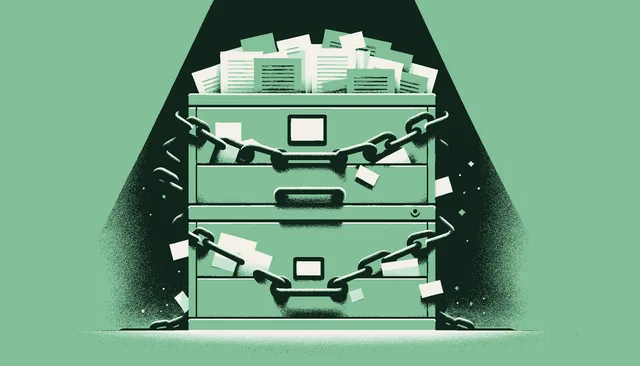


Later is where good ideas go to die.
I want to talk about the word that ends more good ideas than any other word in business. It is not no. It is later.
Most people who fail to act on something they should act on do not say no. Saying no is honest. Saying no closes the door, frees up the attention, and lets the next decision happen. Saying no, when it is the right answer, is a contribution to clarity. The people who say no to AI, or to any other shift in their business, at least have the dignity of a decision. They have evaluated, they have concluded, they have moved on. You can argue with them. You can change their mind. The conversation is alive. The dynamic is the same one I described in To AI Or Not To AI: a decision in either direction is the thing that creates motion.
Why is later more dangerous than no for an operator?
Saying no is a decision. It closes a question, frees up attention, and lets the next decision happen. Saying later defers the decision indefinitely while continuing to expend energy holding the question open. Later creates the appearance of optionality while costing the operator the time and competitive position that a real decision would have preserved. It is also the form quitting takes when the operator running it cannot yet admit that they have quit.
The people who say later are doing something different. They are not making a decision. They are deferring one. They are taking the energy they would have put into a decision and converting it into a holding pattern. After the next hire. After the next raise. After the next quarter. After the holidays. After things calm down. The deferral feels reasonable in the moment, every time. Each individual postponement has a defensible reason. The hire really is coming. The quarter really will be tight. Things really are about to calm down, as soon as the current thing settles.
The trap is that the conditions for things to calm down do not arrive. They keep getting replaced by the next set of conditions. The hire happens, but then there is the onboarding. The raise happens, but then there is the new budget cycle. The thing that was supposed to be the gate gets cleared, and a new gate appears behind it, and the deferral renews itself on a new schedule. This is the same default-by-momentum pattern I described in We've Always Done It That Way, translated into the language of personal decision-making.
Months go by. Then a year. Then two. And the idea that was going to get attention later quietly enters a state I think of as suspended animation. It is not dead. Nothing has been said against it. The plan is to come back to it. The intention is there. But the work that the idea required is being done by other people, in other companies, while the deferral continues.
That is what later actually means in business. It is not a delay. It is a quiet form of quitting. Most of the people running it have not noticed yet.
What is the cost of saying later when it comes to AI adoption?
The cost is the measurable performance gap that has opened between the companies that committed to AI capability and the companies that deferred. Boston Consulting Group's September 2025 study found that companies categorized as future-built are generating 1.7 times the revenue growth, 3.6 times the three-year total shareholder return, 2.7 times the return on invested capital, and 1.6 times the EBIT margin of laggards. That is what the deferral now costs in measurable financial terms.
I am writing about this because the AI shift is the most consequential strategic question on every operator's table right now, and it is also the question that is most vulnerable to the later trap. AI is not waiting. The window is moving every quarter. The companies that are building AI capability now are pulling ahead of the companies that intend to build it later, and the gap between the two is widening fast.
How does BCG categorize companies in its AI value gap research?
BCG categorizes companies into three tiers based on AI maturity. Five percent of companies qualify as future-built, meaning they have built systematic AI capability into the core of how they work. Thirty-five percent are scalers, meaning they are scaling AI efforts and beginning to generate value but admit they could be moving faster. Sixty percent are laggards, meaning they report minimal revenue and cost gains from AI and do not yet have the capabilities for scaling it in place.
The Boston Consulting Group report The Widening AI Value Gap, published in September 2025 and based on a global survey of 1,250 senior executives and AI decision makers across nine industries and more than 25 sectors, categorized companies into three tiers. Five percent of companies qualify as future-built. Thirty-five percent are scalers. Sixty percent are laggards.
The performance gap between the future-built and the laggards is the part that matters. Future-built companies are generating 1.7 times the revenue growth of laggards. They are achieving 3.6 times the three-year total shareholder return. They have 2.7 times the return on invested capital. They have 1.6 times the EBIT margin. They produce 3.5 times the patents.
How much more are AI leaders investing compared to laggards in 2025?
BCG's research found that future-built firms plan to spend 26 percent more on IT than laggards in 2025, dedicate up to 64 percent more of their IT budget to AI, and as a result expect twice the revenue increase and 1.4 times greater cost reductions from those investments. The performance gap between AI leaders and laggards is structured to widen further over the next twelve months, not narrow.
Read that one more time. The companies that already lead are putting substantially more of their IT budget into AI than the laggards, and they expect that investment to translate into twice the revenue increase. The leaders are not slowing down. The market is not waiting. The window is moving, and it is moving faster for the companies that are already in motion.
I want operators to sit with the structure of that gap. It is not that the leaders are slightly ahead. The leaders are increasing their AI allocation while the laggards delay. The compounding curve that produces the 1.7 times revenue growth and 1.6 times margin advantage is being built right now, this quarter, by companies that decided to act when their counterparts decided to wait. By the time the laggards reach the place the leaders are at today, the leaders will be somewhere very different. The race does not pause. The track keeps extending.
That is what makes the later trap so dangerous in this specific moment. The cost of deferring an AI decision is not only the work you do not do. The cost is the gap that opens between you and the operators who did decide, during the months you were waiting for the right conditions. The gap is measurable. The gap is being measured by BCG and by every other major research institution that is tracking enterprise AI adoption. The data is no longer ambiguous. The leaders are pulling away.
This is the moment where saying later is most expensive.
I want to be careful with this argument, because I am not suggesting that every operator should be making every AI decision on a faster timeline than they have planned for. Some decisions deserve careful evaluation. Some businesses have constraints that genuinely justify a slower pace. The point is not that everyone should be moving at maximum speed. The point is that the cost of saying later has gotten meaningfully higher in this specific moment, and most operators have not updated their internal pricing on the deferral.
What is the difference between a real gate and a renewable gate in business decision making?
A real gate is a condition that, once met, allows the operator to make the next decision. A renewable gate is a condition that, once met, simply reveals a new condition behind it that requires waiting. Renewable gates produce the appearance of a structured decision process but functionally serve as indefinite deferral. The test is whether the operator can name a specific condition that, when satisfied, will result in the decision being made.
Here is the question I want operators to ask themselves about the AI decisions on their desk this week. What conditions am I waiting for, specifically, before I commit to this? What happens to those conditions if I am honest with myself? Will they arrive, or will they be replaced by new conditions that also feel like the wrong moment? Is the gate I am waiting for real, or is it a renewable gate that produces a new version of itself every time the current one gets cleared?
If the gate is real, fine. Wait for it. But if the gate is renewable, the wait is not a strategy. The wait is a form of avoidance dressed up as discipline. And the cost of that avoidance is now showing up in the BCG data as a measurable revenue and margin gap that compounds every quarter.
The operators who are pulling ahead right now are not the ones who said yes to every AI tool that came across their desk. They are the ones who refused to say later when they meant no, and refused to say later when the honest answer was yes. They are the ones who replaced the deferral with a decision, in either direction. They closed the open loops. They committed the attention. They moved.
The deferral is the thing that costs you. The decision, in either direction, is the thing that frees you to do the work that comes after.
The next time an idea you actually believe in gets put into the later pile in your business, I want you to notice what is happening. Notice that you are not saying no. Notice that you are not saying yes. Notice that you are putting the idea into a pattern that will reproduce itself, indefinitely, until you either kill it or commit to it. Notice that the conditions you are waiting for are probably renewable. Notice that the cost of the deferral is the gap that is opening between you and the people who decided.
Later is not a strategy. Later is the form quitting takes when the operator running it cannot yet admit that they have quit.
The companies that are pulling ahead in AI right now did not have better information than the ones falling behind. They had a lower tolerance for the later pile. That is the only structural difference between the future-built and the laggards in the BCG data. The leaders converted the open loops into decisions. The laggards left them open, and the open loops became the strategy by default.
If there is an idea sitting in your later pile that you actually believe in, the most expensive thing you can do is leave it there. Pull it out. Decide. If the honest answer is no, say no and free up the attention. If the honest answer is yes, commit and start the work. Either decision will serve you. The third option, which is to leave the idea suspended indefinitely while the window moves, is the one that will not.
That is what every conversation about AI strategy in this moment should actually be about.
Judd Hoffman is CEO and Co-Founder of Ethica AI, building AI-powered tools for real estate transaction workflows.
Quick takes
What is the cost of saying later when it comes to AI adoption?
According to Boston Consulting Group's September 2025 report The Widening AI Value Gap, future-built companies that have committed to AI capability building are generating 1.7 times the revenue growth, 3.6 times the three-year total shareholder return, 2.7 times the return on invested capital, and 1.6 times the EBIT margin of laggard companies that have deferred their AI decisions. The cost of deferral is measured in revenue, margin, return on invested capital, and total shareholder return that accrues to competitors during the months an operator waits for the right conditions.
How does BCG categorize companies in its AI value gap research?
BCG categorizes companies into three tiers based on AI maturity. Five percent of companies qualify as future-built, meaning they have built systematic AI capability into the core of how they work. Thirty-five percent are scalers, meaning they are scaling AI efforts and beginning to generate value but admit they could be moving faster. Sixty percent are laggards, meaning they report minimal revenue and cost gains from AI and do not yet have the capabilities for scaling it in place.
Why is later more dangerous than no for an operator?
Saying no is a decision. It closes a question, frees up attention, and lets the next decision happen. Saying later defers the decision indefinitely. The operator continues to expend energy holding the question open while competitors who decided either way move forward. Later creates the appearance of optionality while costing the operator the time and competitive position that a real decision would have preserved.
How much more are AI leaders investing compared to laggards in 2025?
According to BCG, future-built firms plan to spend 26 percent more on IT than laggards in 2025, dedicate up to 64 percent more of their IT budget to AI, and as a result expect twice the revenue increase and 1.4 times greater cost reductions from those investments. The performance gap between AI leaders and laggards is structured to widen further over the next twelve months, not narrow.
What is the difference between a real gate and a renewable gate in business decision making?
A real gate is a condition that, once met, allows the operator to make the next decision. A renewable gate is a condition that, once met, simply reveals a new condition behind it that requires waiting. Renewable gates produce the appearance of a structured decision process but functionally serve as indefinite deferral. The test is whether the operator can name a specific condition that, when satisfied, will result in the decision being made.
Who is Judd Hoffman?
Judd Hoffman is CEO and Co-Founder of Ethica AI, a company building AI-powered voice tools for real estate transaction workflows, backed by the California Association of REALTORS. He has nearly three decades of operating experience, including more than 15 years across real estate title, transactions, and technology.
What is Ethica AI?
Ethica AI is a real estate technology company building an AI-powered platform that allows real estate agents to complete transaction forms by speaking naturally instead of filling out PDFs manually. Ethica is backed by the California Association of REALTORS as a free member benefit for more than 190,000 members.
Sources
- The Widening AI Value Gap: Build for the Future 2025 (Boston Consulting Group, September 2025): BCG global Build for the Future 2025 study based on 1,250 CXOs and senior executives across 68 countries, nine industries, and more than 25 sectors. Source for the three tiers (5 percent future-built, 35 percent scalers, 60 percent laggards), the performance gap (1.7x revenue growth, 3.6x three-year TSR, 2.7x return on invested capital, 1.6x EBIT margin, 3.5x patents), and the investment gap (future-built firms plan to spend 26 percent more on IT than laggards in 2025, dedicate up to 64 percent more of their IT budget to AI, and as a result expect twice the revenue increase and 1.4 times greater cost reductions).
Transcript
62 words
Later is where good ideas go to die. Look, most people don't fail because they say no. They fail because they say not yet. After the next hire, after the next raise, after things calmed down. But like anything else, AI also isn't waiting. The window moves, the market moves, the opportunity moves. Eventually, later becomes just a quiet way of quitting.