

The PDF is undefeated.
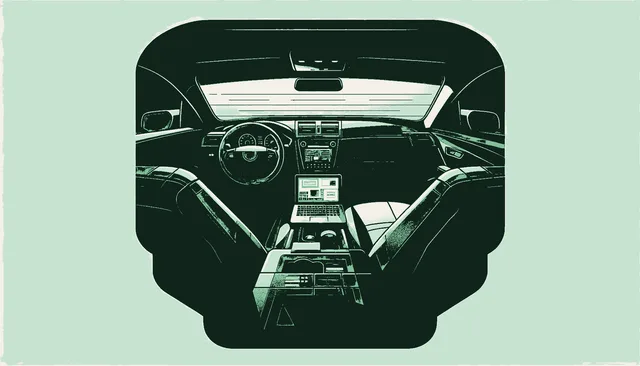
I have been circling that line for a while because I cannot get past it. We live in an age that has put self-driving cars on the road. We have rockets landing themselves back on launch pads. We have AI that writes, codes, reasons, and in some cases makes decisions faster and more accurately than the humans who trained it. And yet every single day in my industry, and in dozens of others, the most critical documents in a transaction are still static PDFs.
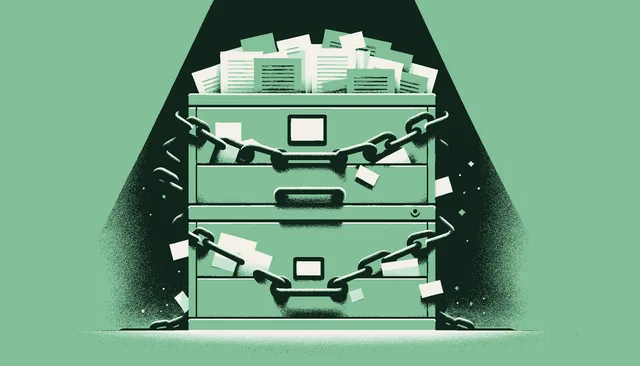
A person signs. They send. They sign again. Somebody has the wrong copy. Somebody has the wrong version. It gets bounced back. A name is spelled wrong. A date is off. A checkbox got missed. Back it goes. Again.
How is this thing still around.
A format that earned its place
That is the question I keep coming back to. Not as an attack on the PDF itself. Adobe created something genuinely important back in 1993. The format solved a real problem. You could send a document to anyone, on any machine, and it would look the same when it arrived. Before PDF, that was not true. Documents broke across systems all the time. PDF fixed that, and the format earned its place.
But the PDF stopped being a solution somewhere along the way and quietly became the problem. It froze at the point of solving one problem, and then the world kept moving. The PDF did not. Thirty-plus years later, the format is still doing exactly what it was designed to do in 1993. Everything around it has changed. The format has not.
The scale of this is staggering. Adobe has reported that 200 billion PDFs were opened in its products in a single year, and there are three quarters of the Fortune 500 using Acrobat every single day. That is not a format limping along. That is a format that has achieved total market dominance and held it for three decades. No competitor has dislodged it. No newer standard has replaced it. The PDF just keeps winning.
Undefeated.
The hidden tax of the undefeated format
That word has not left my head since I first heard it. The PDF is undefeated. Not because it is good. Not because it is the best tool for the job. Because nothing has been able to knock it out.
And the reason that matters, the reason I keep coming back to it, is that the PDF is not a neutral format. It has specific costs attached to it that compound every time it gets used in a workflow where it no longer fits. The costs show up as friction. They show up as errors. They show up as time. They show up as frustration for the people at the keyboard trying to do their job, and they show up as slower transactions for the clients those people are trying to serve.
McKinsey has reported that the average interaction worker spends 28 percent of the workweek managing email and nearly 20 percent of the workweek looking for internal information or tracking down colleagues who can help with specific tasks. Roughly half of the workweek for a professional is gone before any actual work happens, swallowed by the churn of finding, sending, opening, updating, and resending documents and messages. A substantial chunk of that churn is static documents in motion. PDFs getting shuffled around. PDFs getting version-controlled badly. PDFs getting redlined. PDFs getting lost. That is the hidden tax of the undefeated format.
The real estate parallel
I see it most sharply in real estate. An agent is in the middle of a transaction. A client wants to submit an offer. The agent opens a form. The form is a PDF. The agent fills it out by hand, either on a screen or on paper. The agent saves it. The agent emails it. The other side opens it. Something is wrong. The other side sends it back with a correction. The agent updates it. Re-saves it. Re-sends it. The other side opens it again. A different thing is wrong. Send it back. This is not a hypothetical. This is what thousands of agents do every week in every market in the country. The undefeated format is undefeated because nothing has beaten it on its own terms. But on the terms of what the work actually requires in 2026, the PDF has been broken for a long time.
The second-order costs
The second-order effects of this are worse than the first-order ones. When an agent spends an hour ping-ponging a form back and forth for a signature, they are not with a client. They are not prospecting. They are not negotiating. They are not growing their business. They are babysitting a document. Multiply that across a week, a month, a year, and the career cost of the undefeated format shows up in revenue the agent never generated because they were stuck managing static paper that should not exist in its current form.
Clients feel this too, even when they cannot name it. A client who has to sign the same form three times because the first two had errors is a client who comes away from the transaction slightly less confident in their agent, slightly less confident in the process, and slightly more open to trying something different next time. That is not a product failure. That is a format failure. The agent did nothing wrong. The agent is operating inside a workflow that is structurally set up to produce exactly that kind of friction.
It is worth pausing on the fact that the PDF predates the modern internet. It predates mobile. It predates cloud storage as we know it. It predates smart devices. It predates voice interfaces. It predates artificial intelligence in any meaningful sense. The format that is still the dominant way to exchange a real estate contract, a medical release, a legal disclosure, and a government filing was designed before any of the tools we now take for granted existed. That is not continuity. That is stasis.
The coordination problem
Here is what interests me about this moment.
The reason the PDF is still undefeated is not because newer tools cannot beat it. The tools exist. Voice interfaces work. Structured data transfer works. Collaborative document editing works. AI-assisted form filling works. The technology is no longer the bottleneck. What is keeping the PDF undefeated is inertia. It is the fact that replacing the PDF in any given workflow means changing how every participant in that workflow operates. It means retraining agents. It means updating broker systems. It means convincing regulators. It means convincing lenders. It means convincing title companies. It is a coordination problem, not a technology problem. And the PDF has survived for thirty years because everyone in the workflow assumed it was someone else's job to replace it.
Coordination problems are the hardest problems to solve. A single player cannot fix them. A single company cannot fix them on their own. The format wins by default when every participant assumes the next participant is not ready for something better. Meanwhile the friction keeps running. The cost keeps compounding. The professionals at the keyboard keep doing the work that the undefeated format created for them. Nothing breaks the inertia until someone builds an alternative that is so clearly better at the actual work that the cost of switching becomes smaller than the cost of staying.
How formats actually get replaced
That is the only way inertia ever breaks. Not by arguing that the old tool is bad. The old tool is not bad. It was designed for a world that does not exist anymore. The way to replace it is to make the newer tool so obviously superior in the exact context where it gets used that the switch starts happening without anyone needing to make a case for it. That is how formats actually get replaced, historically. Not by committees. Not by industry councils. By individual users experiencing a better workflow and refusing to go back.
The companies and the people who break this logjam are the ones who will define the next decade in any industry that runs on documents. Because once the PDF starts losing ground in one workflow, it will lose ground faster in the next one. Once agents see that a form does not have to be static, that a document does not have to be filled out by hand, that a signature does not have to bounce back and forth five times to land correctly, they do not go back. Once a client sees that a transaction does not have to involve sending the wrong version twice, they do not accept the old process next time.
That is the moment the PDF starts to lose.
The format does not deserve loyalty
I am not mourning the PDF. Formats do not deserve loyalty. They deserve to keep earning their place or get replaced. The PDF earned its place for thirty years. It does not owe anyone anything, and nobody owes it anything either. The only question that matters now is which workflows are going to stop tolerating the friction and start building with the tools that actually exist in 2026.
Because the PDF has been undefeated for a long time. It has not been unbeatable. It just has not been beaten yet. There is a difference, and the difference is where the next wave of productivity is going to come from.
How is this thing still around.
It is still around because we have not decided to let it go.
Judd Hoffman is CEO and Co-Founder of Ethica AI, building AI-powered tools for real estate transaction workflows.
Quick takes
When was the PDF created?
Adobe introduced the Portable Document Format in 1993 alongside the first version of Adobe Acrobat. The format was released to solve the problem of documents breaking across different systems and has since become the dominant format for exchanging fixed-layout documents worldwide. PDF became an open ISO standard in 2008.
How widely is the PDF used today?
Adobe has reported that approximately 200 billion PDFs were opened in its products in a single year, and roughly three-quarters of the Fortune 500 use Acrobat daily. More than 100 million people use Acrobat every day worldwide, making the PDF the dominant format for exchanging electronic documents more than three decades after its introduction.
Why is the PDF still the dominant format in real estate?
The PDF remains dominant in real estate because replacing it is a coordination problem, not a technology problem. Every participant in a transaction (agents, brokers, lenders, title companies, regulators) would need to adopt a new format together. In the absence of a better tool that works across all those participants, the static PDF persists as the default even though it creates friction throughout the workflow.
How much time do professionals lose to document workflow friction?
According to McKinsey research, the average interaction worker spends 28 percent of the workweek managing email and nearly 20 percent looking for internal information or tracking down colleagues. A substantial share of that time is consumed by the churn of static documents in motion, including finding, sending, opening, updating, and resending PDFs that require manual correction across multiple rounds.
What will replace the PDF in real estate transactions?
The technologies that can replace static PDFs already exist, including voice interfaces, AI-assisted form filling, structured data transfer, and collaborative document editing. The PDF has persisted not because superior alternatives do not exist, but because coordination across all participants in a transaction has been the bottleneck. Replacement will happen workflow by workflow as individual users experience a better process and refuse to return to static forms.
Who is Judd Hoffman?
Judd Hoffman is CEO and Co-Founder of Ethica AI, a company building AI-powered voice tools for real estate transaction workflows, backed by the California Association of REALTORS. He has nearly three decades of operating experience, including more than 15 years across real estate title, transactions, and technology.
What is Ethica AI?
Ethica AI is a real estate technology company building an AI-powered platform that allows real estate agents to complete transaction forms by speaking naturally instead of filling out PDFs manually. Ethica is backed by the California Association of REALTORS as a free member benefit for more than 190,000 members.
Sources
- Adobe: Acrobat 25th Anniversary: 200 billion PDFs opened annually, three-quarters of Fortune 500 use Acrobat daily
- McKinsey Global Institute: The Social Economy: 28% of workweek on email, nearly 20% searching for information
Transcript
58 words
The PDF is undefeated. Not sure how we have self-driving cars. We have AI. We have rockets. We live in this technology age, but we're still dealing with this static form that we sign. We send. We signed again. Someone has the wrong copy and the wrong version. They send it back. How is this thing still around?