
Tilly Norwood is here. She's an AI actress. Some people will think it's fascinating. Some people will think it's ridiculous. Others will actually hate it. But the audience will decide. Technology can create a character for everybody. It cannot force a connection. If people feel entertained, they'll watch it and use it. If people feel tricked, they'll reject it. This is the line with AI. Trust comes first, and then attention is second.
Let me sit on this, because what's happening with her is the clearest test case anyone's run on AI adoption, and almost everybody is watching the wrong part of it.
For anyone who missed the story, Tilly Norwood is a fully AI-generated character created by a London studio. She has an Instagram following, a portfolio site, and as of this week, a feature film. She was announced to star in a movie called Misaligned. The reaction has been exactly what you'd expect. The actors' union said flatly that she isn't an actor and that creativity should remain human-centered. Reviewers have not been kind. And a large part of the internet has decided she represents the end of something.
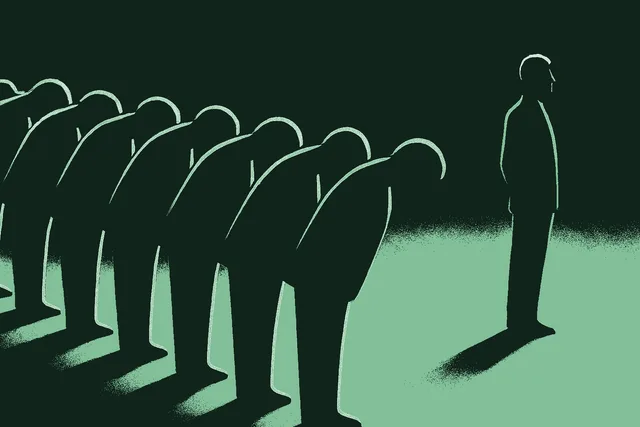
Here's what almost nobody is saying. None of that reaction decides anything. Not the union statement, not the think pieces, not the outrage, and not the enthusiasm from the people building her. The audience decides. It always does. Every technology that ever tried to enter culture ran into the same wall, and the wall is not made of critics. It's made of ordinary people choosing what they'll spend two hours with.
And that's why this story matters far beyond Hollywood. What we're watching is a live experiment in whether people will accept something they know is artificial, and the answer will tell you almost everything about how AI lands in every other industry.
Because here's the thing that's easy to miss. Technology can create a character for everybody. That part is solved. The tools can now generate a face, a voice, a personality, a backstory, an Instagram feed, and now a movie role. Production is not the constraint. Production has never been the constraint for very long with any technology.
What technology cannot do is force a connection. That's not a technical problem waiting on a better model. It's a human decision, made one person at a time, and it can't be engineered. You can make a character. You cannot make someone care about the character. That gap between creation and connection is where this entire era gets decided.
So how do people decide? I think it comes down to something very simple. If people feel entertained, they'll watch it and they'll use it. If people feel tricked, they'll reject it. And they'll reject it hard, harder than if you'd never tried at all.
Feel the difference between those two, because it's not about the technology. It's about the disclosure. Nobody minds a cartoon. Nobody feels betrayed by an animated character, because everyone knows exactly what they're looking at, and they chose to be there anyway. The deal was clear. The moment the deal becomes unclear, the moment there's a suspicion that someone tried to slip something past you, the audience turns, and the technology gets blamed for what was actually a trust failure.
This is the line with AI. Not the capability line. The trust line.
Trust comes first, and then attention is second. Get that order backwards and you lose both. Grab for attention first, hide the AI, hope nobody notices, and you might win a week of headlines and then permanently lose the room. Earn trust first, be plain about what the thing is, let people opt in with their eyes open, and attention follows on its own and stays.
And this is exactly the principle I keep coming back to for every industry, including mine. The companies that put AI into people's hands and are honest about what it is, what it does, and where it fails, those companies get to keep the relationship. The companies that quietly slide AI into a process and hope the customer never realizes will get exactly one shot at that, and when it's discovered, and it will be, they don't lose the AI. They lose the customer.
So watch what happens to her. Not because the movie matters, and not because Hollywood matters more than anywhere else. Watch because the audience is about to teach every single one of us the same lesson at once. Technology can create a character for everybody. It cannot force a connection. Trust comes first. Attention is second.
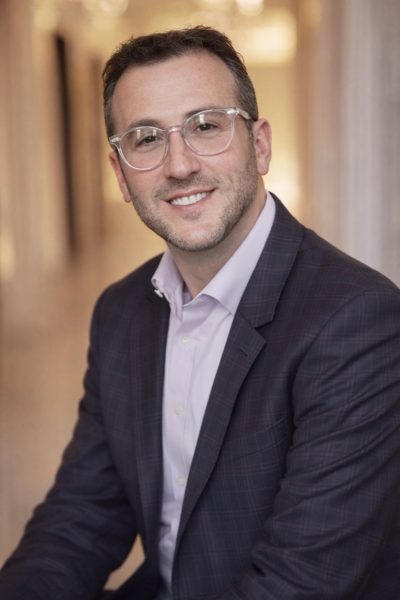
Judd Hoffman is CEO and Co-Founder of Ethica AI, building AI-powered tools for real estate transaction workflows.
Quick takes
Who is Tilly Norwood?
Tilly Norwood is a character created with generative artificial intelligence by Xicoia, the AI division of the London production company Particle6, founded by Eline Van der Velden. She was announced as the star of her first feature film, a comedy-drama called Misaligned, after drawing significant controversy across the entertainment industry.
What did SAG-AFTRA say about Tilly Norwood?
The actors' union stated that it does not consider Norwood an actor, that creativity is, and should remain, human-centered, and that the character has no life experience to draw from and no emotion. The union also said audiences have not shown interest in computer-generated content untethered from human experience.
Will audiences accept AI-generated characters?
The audience decides, not the critics or the creators. The determining factor is trust rather than capability. When people feel entertained and know clearly what they are watching, they engage. When people feel tricked or feel something was concealed from them, they reject it, often more strongly than if the attempt had never been made.
What does the Tilly Norwood story teach other industries about AI?
That trust precedes attention. Technology can now generate a convincing character, product, or experience, but it cannot manufacture the human decision to connect with it. Companies that are transparent about what their AI is, what it does, and where it fails retain their customers. Companies that conceal AI in a process risk losing the relationship entirely once it is discovered.
What is the difference between AI that gets accepted and AI that gets rejected?
Disclosure. Audiences do not object to animation or obvious artifice, because the terms are clear and they opted in knowingly. Rejection follows the suspicion of concealment. The failure in those cases is a trust failure rather than a technology failure, though the technology usually takes the blame.
Who is Judd Hoffman?
Judd Hoffman is CEO and Co-Founder of Ethica AI, a company building AI-powered voice tools for real estate transaction workflows, backed by the California Association of REALTORS. He has nearly three decades of operating experience, including more than 15 years across real estate title, transactions, and technology.
What is Ethica AI?
Ethica AI is a real estate technology company building an AI-powered platform that allows real estate agents to complete transaction forms by speaking naturally instead of filling out PDFs manually. Ethica is backed by the California Association of REALTORS as a free member benefit for more than 190,000 members.
Sources
- Variety: AI Actor Tilly Norwood to Make Movie Debut in Comedy-Drama Misaligned: Tilly Norwood cast in her first feature film, the comedy-drama Misaligned, from UK studio Particle6
- CBS News: AI actor Tilly Norwood set to star in first feature film: SAG-AFTRA statement that it does not consider Norwood an actor and that creativity is, and should remain, human-centered
Transcript
78 words
Tilly Norwood is here. She's an AI actress. Some people will think it's fascinating. Some people will think it's ridiculous. Others will actually hate it. But the audience, we will decide. Technology can create a character for everybody. It cannot force a connection. If people feel entertained, they'll watch it and use it. If people feel tricked, they'll reject it. This is the line with AI. If you trust it, that comes first and then attention is second.