

Perspective changes everything. The problem gets smaller. The lesson actually gets clearer and the path is easier to see. Most bad days are not the whole story. That's just one chapter. Step back. Breathe. Keep going. The view is usually better from a little distance. Just learned that recently.
Let me sit on this, because it's the kind of thing every founder I know has had to learn the hard way at least once, and most of us have to keep relearning.
Why do problems feel bigger in the moment?
When attention narrows to whatever is going wrong, the rest of the picture becomes invisible and the problem feels disproportionate. From close range, a small obstacle can look like a wall. Adding distance restores the sense of scale that lets the situation be seen accurately.
When you're in the middle of a bad day, the day looks bigger than it is. The problem looks bigger than it is. The setback looks like a verdict instead of a chapter. Everything in front of you narrows to whatever's gone wrong, and the rest of the picture, the part where things have been working, the part where this is one of a hundred decisions on a long road, goes invisible. That narrowing is real, and it's the trap.
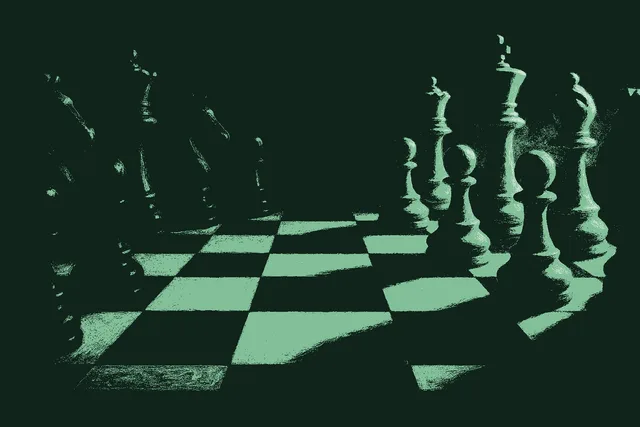
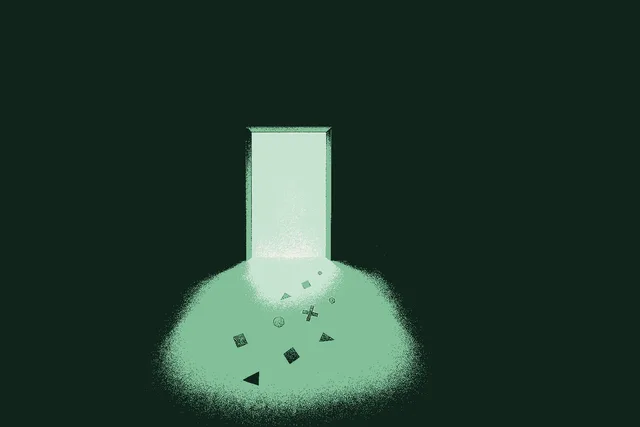
The narrowing is also a lie. Or maybe not a lie, exactly. A distortion. The brain in a tight spot is not good at scale. It can't tell you whether the thing you're staring at is the size it feels or whether you're an inch from it. From an inch away, everything looks enormous. Take three steps back and most of what feels like a wall turns out to be a doorway.
What does perspective actually change?
Perspective changes scale. The problem doesn't shrink, but seeing it at the right size and against the right context makes the path forward clearer. Most situations that feel overwhelming in the moment look proportionate from a small distance.
That's what perspective actually buys you. Not optimism. Not denial. Scale. The ability to look at the same situation and see it at the right size, with the right context, against the right backdrop. Most of the time the situation didn't change. The distance changed. And the distance changes the meaning.
Here's what I've noticed in my own building. The bad days that felt like the end of something turned out to be the middle of something. The setbacks that felt fatal turned out to be the moment that forced a better version of whatever we were doing. The conversations that felt like crises looked, six months later, like routine course corrections. The pattern is so consistent that I've stopped trusting my own read of the moment when I'm in it. I know now that whatever I'm feeling about it today is almost certainly wrong by a factor of two or three, in whichever direction my brain is currently leaning.
How do you handle a bad day as a founder?
Step back, physically and mentally. Get out of the immediate environment, walk, breathe, and let the situation rest while you regain perspective. Most bad days look smaller and more workable when viewed from even a little distance, and the lesson usually becomes clearer once the noise subsides.
So the move, when the day goes sideways, is the move I used to be too proud to make. Step back. Not metaphorically. Physically. Get out of the chair, get out of the building, get out of the conversation. Walk. Breathe. Let the air do its work. The problem won't move while you're gone. But your relationship to it will.
What is the value of stepping back from a difficult situation?
Stepping back creates the space to hear the signal instead of the noise. It allows honest questions like "what's the real issue here," "what would I tell a friend in this position," and "what part of this will matter in a month." The honest answers are usually only audible from a distance.
I think what happens in that space is something close to honesty. Without the distance, you're inside the noise. With the distance, you start to hear the actual signal. What's the real issue here. What's the lesson if I'm willing to be honest. What would I tell a friend going through this exact thing. What part of this is going to matter in a month, and what part is going to be forgotten by Friday.
Most of the time, when I ask myself those questions from twenty feet back instead of one foot back, the answer is some version of "this is one chapter." Not the book. Not the verdict. A chapter. One of many. And the move is to write the next one, not to stop reading.
I'm not going to pretend the bad days don't matter. They do. There's information in them. There's almost always a lesson that wouldn't have been visible without the difficulty. But the information arrives later, after you've gotten the distance to actually see it. In the moment, the information is buried under the noise, and the only way to dig it out is to step back far enough to hear yourself think.
So when I say the view is better from a little distance, this is what I mean. Not denial. Not toxic positivity. The honest, sharper, smaller, truer view of what you're actually dealing with. Once you can see it at the right size, you can act on it instead of reacting to it. And acting on it, calmly, in proportion, is the entire job, day after day, in any company worth building.
Most bad days are not the whole story. That's just one chapter. Step back. Breathe. Keep going. The view is usually better from a little distance. Just learned that recently.
Judd Hoffman is CEO and Co-Founder of Ethica AI, building AI-powered tools for real estate transaction workflows.
Quick takes
What does perspective actually change?
Perspective changes scale. The problem doesn't shrink, but seeing it at the right size and against the right context makes the path forward clearer. Most situations that feel overwhelming in the moment look proportionate from a small distance.
How do you handle a bad day as a founder?
Step back, physically and mentally. Get out of the immediate environment, walk, breathe, and let the situation rest while you regain perspective. Most bad days look smaller and more workable when viewed from even a little distance, and the lesson usually becomes clearer once the noise subsides.
Why do problems feel bigger in the moment?
When attention narrows to whatever is going wrong, the rest of the picture becomes invisible and the problem feels disproportionate. From close range, a small obstacle can look like a wall. Adding distance restores the sense of scale that lets the situation be seen accurately.
What is the value of stepping back from a difficult situation?
Stepping back creates the space to hear the signal instead of the noise. It allows honest questions like "what's the real issue here," "what would I tell a friend in this position," and "what part of this will matter in a month." The honest answers are usually only audible from a distance.
Who is Judd Hoffman?
Judd Hoffman is CEO and Co-Founder of Ethica AI, a company building AI-powered voice tools for real estate transaction workflows, backed by the California Association of REALTORS. He has nearly three decades of operating experience, including more than 15 years across real estate title, transactions, and technology.
What is Ethica AI?
Ethica AI is a real estate technology company building an AI-powered platform that allows real estate agents to complete transaction forms by speaking naturally instead of filling out PDFs manually. Ethica is backed by the California Association of REALTORS as a free member benefit for more than 190,000 members.
Sources
- Remote Work Didn't Break Culture. It Exposed It.: On why remote work revealed existing company culture rather than damaging it, and the focus-versus-alignment split leaders keep missing. Referenced here for the discipline of acting on a situation rather than reacting to it.
- Competition Makes Everybody Better: On why competition forces clarity, speed, and execution, and why the winners in AI will not be the loudest. Referenced here as the daily work of acting in proportion, which is the whole job in any company worth building.
Transcript
49 words
Perspective changes everything. The problem gets smaller. The lesson actually gets clearer and the path is easier to see. Most bad days are not the whole story. That's just one chapter. Step back. Breathe. Keep going. The view is usually better from a little distance. Just learned that recently.